DNA Close Up Backgrounds: A Microscopic Journey for Your Screen
The Art of Scientific Detail in Digital Design
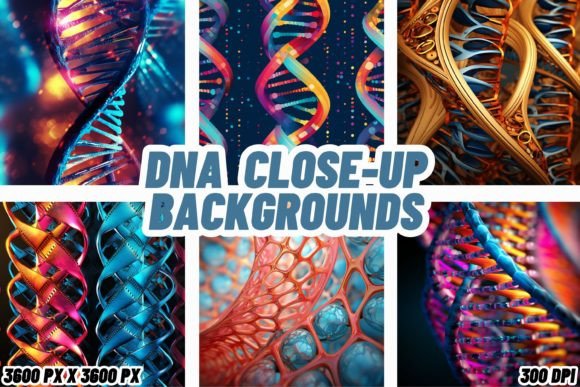
There’s a unique power in imagery that bridges the gap between the scientific and the aesthetic. DNA Close Up Backgrounds offer exactly that—a collection of 12 HD images that transform the fundamental code of life into a captivating visual experience. These aren’t just generic science photos; they are carefully composed, high-resolution explorations of the DNA double helix, revealing its intricate twists, turns, and luminous colors in stunning detail. The personality of this collection is one of elegant complexity, blending the rigor of molecular biology with the fluid, dynamic beauty of abstract art. The overall appeal lies in its ability to make the microscopic monumental, turning your desktop or presentation backdrop into a canvas of genetic wonder.
For designers and content creators, this collection functions much like a premium font or a versatile design asset. It provides a distinct visual voice. The style is modern and clean, with a focus on clarity and form, yet it carries an inherent narrative about discovery and life. It’s a creative font for your visual projects, but in photographic form. The overall appeal is broad, resonating with anyone from a biotech startup founder to a blogger writing about innovation, or a teacher creating engaging educational materials. It speaks a language of precision, beauty, and forward-thinking curiosity.
Where This Visual Style Excels
The true value of DNA Close Up Backgrounds is in their remarkable versatility across different mediums and projects. Understanding where they work best allows you to leverage their full potential.
- Digital & Branding: For web design and social media graphics, these backgrounds add instant intellectual credibility and visual intrigue. They are perfect for hero images on a website for a health tech company, a genetics blog, or a pharmaceutical research firm. As part of a brand identity, they can subtly communicate innovation, precision, and a connection to foundational science without using a single word. Think of it as a visual serif font—traditional, reliable, and full of inherent structure.
- Presentations & Virtual Meetings: Elevate your next Zoom call or keynote presentation. Using one of these HD images as a virtual background does more than hide a messy room; it frames you within a context of expertise and thought leadership. It’s a practical application that immediately boosts your professional presence and captures attention.
- Editorial & Packaging Design: In editorial design, such as magazine layouts or book covers for science fiction or non-fiction, these images provide a powerful, thematic backdrop. For packaging design in the biotech, wellness, or advanced skincare sectors, a subtle, high-resolution DNA texture can convey cutting-edge research and efficacy, much like a carefully chosen sans serif font conveys modernity and cleanliness.
- Personal & Commercial Projects: Entrepreneurs and small business owners can use these backgrounds for product mockups, email headers, or digital ads to stand out in a crowded market. Crafters and hobbyists might find them inspiring for creating unique digital art, custom stationery, or educational posters. The license allows for this wide-ranging use, making it a valuable asset in your creative toolkit.
Integrating DNA Imagery into Your Creative Workflow
Choosing to use a visual set like DNA Close Up Backgrounds is the first step. Integrating it effectively is where the real design work happens. Here’s a practical guide to making it work for you.
Evaluating Fit and Testing Applications
Before committing, consider your project’s core message. Does innovation, science, health, or complexity align with your goals? If so, this is a strong fit. Treat the selection process like you would when choosing a typeface. Don’t just look at the thumbnail. Download the images and test them in context. Place your logo over one. See how text—whether a display font for a headline or a body copy style—reads against the intricate background. The best backgrounds in this collection will have areas of lower visual density where text can sit comfortably, maintaining readability and a clear visual hierarchy.
Practical Pairing and Composition
The dynamic lines of the DNA strands are inherently directional. Use this to your advantage. A helix that curves from the bottom-left to the top-right can guide the viewer’s eye naturally toward your key message or call-to-action. When pairing with typography, opt for simplicity. A clean, geometric sans serif font often complements the organic complexity of the imagery, creating a balanced and professional look. Avoid overly decorative script fonts or handwritten fonts that might compete for attention and reduce legibility.
Consider the color palette within the backgrounds. Many feature blues, purples, and teals—colors often associated with trust, wisdom, and technology. Use these as accent colors in your broader design to create cohesion and strengthen brand perception. This approach fosters recognition and builds a consistent visual language across all your materials.
Maximizing Impact and Consistency
To build consistency, don’t just use one image once. Rotate through the collection for different blog posts, use a consistent filter or overlay for all your social media stories, or select one specific background as your signature Zoom backdrop. This repetition builds recognition. The goal is to use these assets to create a signature style that is uniquely yours, enhancing audience engagement through a consistent and intriguing visual motif.
Ultimately, DNA Close Up Backgrounds are more than just pretty pictures. They are a strategic design tool. They offer a way to communicate complex ideas visually, to add depth and sophistication to digital spaces, and to create a memorable brand experience. By thoughtfully applying these images, you can transform the ordinary into the extraordinary, letting the dynamic, elegant structure of life itself become the backdrop for your ideas. Let your next project be informed by this beautiful intersection of science and art.