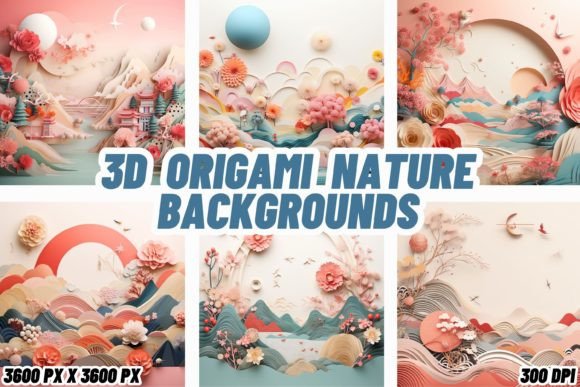
Immerse Yourself in 3D Origami Nature Backgrounds
In a digital world saturated with flat gradients and standard stock photography, there is a growing hunger for visual assets that offer depth, tactility, and genuine artistic craftsmanship. We are constantly looking for ways to make our screens—whether a desktop, a Zoom backdrop, or a social media feed—feel less like a grid of pixels and more like a curated gallery. This is precisely where the concept of 3D origami nature backgrounds steps in. It is not merely a collection of images; it is a sophisticated design strategy that leverages modern typography principles, specifically the interplay of shadow, light, and dimensionality, to create a sense of serene immersion.
When we talk about a "background" in this context, we are discussing a foundational layer of visual identity. Just as a premium font sets the tone for a brand’s voice, these 3D origami landscapes set the tone for your digital environment. The appeal lies in the paradox of the medium: paper is inherently flat, yet through the art of modular origami, it is transformed into complex, three-dimensional sculptures that mimic the organic curves of nature—leaves, mountains, and flora. For the creative professional, entrepreneur, or designer, utilizing these assets is a way to signal a commitment to quality and an appreciation for intricate design.
The Aesthetic of Tactile Depth in Digital Spaces
The visual personality of 3D origami nature backgrounds is distinct. It bridges the gap between the organic and the geometric. Nature is rarely symmetrical, yet when interpreted through the lens of paper folding, it takes on a harmonious, mathematical precision. This style functions much like a high-end display font in the world of type design; it demands attention through its unique construction rather than loud colors. The "crystal-clear high-resolution visuals" mentioned in the concept are critical here. High definition is not just about sharpness; it is about revealing the texture of the paper fibers and the subtle gradients of light hitting the folds, which creates that immersive experience.
For content creators and marketers, this aesthetic offers a sophisticated alternative to the standard "flat lay" look. Imagine a presentation where the background isn't a solid corporate blue, but a subtle arrangement of 3D paper ferns in soft focus. This adds a layer of brand identity that feels curated and thoughtful. It suggests that the presenter values creativity and attention to detail—traits that are highly valued in industries ranging from packaging design to editorial design. The visual "personality" of these backgrounds is one of calm confidence and artistic wonder.
Strategic Applications: From Web Design to Social Media
Understanding where to deploy these assets is key to maximizing their value. In web design, these backgrounds can serve as hero images for landing pages related to eco-friendly products, wellness, mindfulness, or creative agencies. They provide a rich canvas that allows text—perhaps set in a clean sans serif font or an elegant script font—to pop without feeling disconnected from the background. The depth of the 3D effect naturally creates a visual hierarchy, drawing the user's eye to the foreground content while maintaining a captivating backdrop.
For those involved in social media graphics, the application is even more direct. Platforms like Instagram and Pinterest thrive on visual novelty. A feed that utilizes 3D origami nature elements immediately stands out in a scroll of flat photography. These assets are perfect for quote cards, story backgrounds, or even video thumbnails. The "dynamic and captivating" nature of the composition ensures that even a static image feels energetic. Furthermore, for the remote workforce, using these as Zoom or Teams backgrounds adds a professional yet artistic flair to virtual meetings, distinguishing you from the sea of blurred living rooms.
Influencing Perception and Audience Engagement
Visual assets are not just decoration; they are tools of communication. The use of 3D origami nature backgrounds can significantly influence audience engagement and brand perception. In logo design or brand identity work, presenting a logo against a textured, three-dimensional background can help clients visualize how the mark interacts with the physical world. It adds a sense of realism and tangibility that flat white space cannot provide.
From a psychological perspective, the "nature" element evokes feelings of growth, stability, and organic connection, while the "origami" aspect speaks to creativity, patience, and precision. This combination is powerful for brands in the wellness, education, or luxury sectors. It is a creative font equivalent for your background—it tells a story without using words. When a small business owner or a blogger uses these backgrounds, they are elevating their content from amateur to professional. It signals to the audience that the creator has invested in high-quality design assets, which subconsciously builds trust and credibility.
Practical Guidance for Integration and Pairing
Integrating these backgrounds into your workflow requires a thoughtful approach to ensure they enhance rather than overwhelm. Here are practical recommendations for designers and creators:
- Evaluating Project Fit: Consider the tone of your message. These backgrounds work best for themes of creativity, nature, sustainability, and mindfulness. They may not be the right fit for high-tech industrial or gritty urban aesthetics.
- Typography Pairing: Because the backgrounds are intricate, your typography needs to be legible. A bold serif font or a geometric sans serif font often works best. Avoid overly complex handwritten fonts that might get lost in the folds of the paper. Ensure high contrast between the text color and the specific area of the background where the text sits.
- Depth of Field: If you are editing these images, use a slight Gaussian blur on the background elements to simulate depth of field. This pushes the "nature" elements back and brings your foreground content (text or logo) forward, enhancing readability.
- Color Harmony: Use the color palette of the origami art to inform your text and accent colors. This creates a cohesive and harmonious visual experience, reinforcing your brand identity.
Ultimately, these 3D origami nature backgrounds are more than just pretty pictures. They are versatile design assets