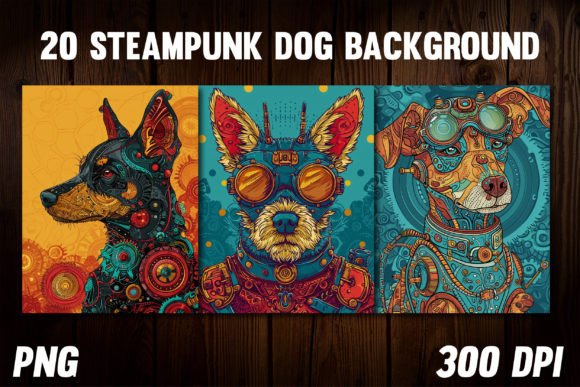
Steampunk Dog Backgrounds for Covers 4: Mechanical Whimsy for Designers
There’s a unique challenge in the world of design: finding assets that are both highly specific and broadly useful. We often encounter resources that are either generic to the point of blandness or so niche they become a one-trick pony. The Steampunk Dog Backgrounds for Covers 4 collection strikes a rare and valuable balance. It offers a potent, cohesive aesthetic that can instantly define a project, while providing enough versatility for creators across multiple disciplines. This isn't just a set of pretty pictures; it's a toolkit for injecting personality, narrative, and a touch of mechanical wonder into your work.
Defining the Aesthetic: More Than Just Gears and Puppies
At first glance, the concept seems straightforward: dogs plus steampunk. But the execution within this collection is what elevates it. The visual language is a sophisticated blend of Victorian-era industrialism and anthropomorphic charm. Imagine a dignified corgi in brass goggles, or a pug whose collar is a intricate assembly of pressure gauges and tiny, whirring cogs. The backgrounds themselves are rich tapestries of texture—weathered leather, oxidized copper, intricate clockwork mechanisms, and maps of fantastical realms. This creates a distinct brand identity for any project: one that communicates creativity, a sense of adventure, and a playful yet refined sensibility.
The personality of these designs is unmistakable. They are whimsical without being childish, complex without being cluttered. This makes the Steampunk Dog Backgrounds for Covers 4 an ideal creative font for visual storytelling. For a book cover, it immediately sets a genre expectation—fantasy, alternate history, cozy mystery with a twist. For packaging design, it tells customers a product is handcrafted, imaginative, and perhaps a little eccentric. The overall appeal lies in its ability to convey a full narrative in a single image, saving the designer from having to build a world from scratch.
Practical Applications: Where This Style Truly Shines
Understanding where to deploy such a distinctive style is key to its success. Think beyond the obvious. While perfect for a steampunk novel series, these backgrounds have surprising utility in editorial design and web design.
- Publishing & Editorial: Beyond book covers, use them for chapter dividers, magazine feature headers on topics like vintage technology, DIY craftsmanship, or even pet care with a creative twist. They add immense visual hierarchy and break up text-heavy pages effectively.
- Branding & Marketing: A boutique brewery, a bespoke tailor, a specialty coffee roaster, or a pet accessory shop with a vintage flair can use these visuals in their social media graphics, website banners, and logo design concepts. They become a core part of the brand identity, making the brand instantly recognizable and memorable.
- Digital & Print Projects: The applications are vast. Design compelling podcast artwork, create eye-catching social media graphics for Instagram or Pinterest, develop unique event invitations, or produce stunning scrapbooking pages. For small business owners, this design asset can be the foundation of a entire product line of prints, postcards, or merchandise.
The key is to match the aesthetic weight of the background with the project's goals. A heavy, gear-filled background might overwhelm a minimalist business card but could be perfect for a poster. A more subtle, texture-focused variant might work beautifully as a website background that doesn't compete with navigation.
Working With This Asset: A Designer's Guide
Integrating a strong visual element like this requires thoughtful execution to maintain professionalism and readability. Here’s how to approach it practically.
Typography Pairing is Everything
This is arguably the most critical decision. The background is expressive, so your text must be supremely legible and stylistically complementary. Avoid competing ornate script fonts or handwritten fonts for body copy. Instead, pair the intricate backgrounds with clean, sturdy typefaces. A strong sans serif font like Helvetica Neue or Futura provides excellent contrast and modern readability. A classic serif font like Garamond or Baskerville can evoke a Victorian feel while remaining elegant and clear. For headlines, a display font with some character—perhaps one with subtle industrial or art deco influences—can tie the theme together without sacrificing clarity. Always test your font pairing at various sizes to ensure hierarchy is maintained.
Evaluating Project Fit and Composition
Not every project calls for a dog in goggles. Evaluate fit by asking: Does this visual narrative support my message? Is the audience likely to appreciate this blend of whimsy and mechanics? The Steampunk Dog Backgrounds for Covers 4 excel when targeting an audience that values creativity, nostalgia, and storytelling. When using the asset, consider composition. Use overlays, vignettes, or color adjustments to control the intensity. Sometimes, desaturating the background slightly or using it in a section rather than full-bleed can make it work in more conservative contexts.
Licensing and Final Checks
As with any premium font or design asset, scrutinize the licensing. Ensure the commercial font license (or in this case, asset license) covers your intended use, whether it's for a client project, a commercial product, or a personal portfolio. Review what's included: are there multiple background variations, seamless tiles, or high-resolution files suitable for print? Conducting a final readability test across devices and in print proofs is non-negotiable. The most beautiful background fails if it makes your call-to-action impossible to read.
In the end, the Steampunk Dog Backgrounds for Covers 4 offer more than decoration. They provide a gateway to a specific mood and world. Used with strategic intent and solid design principles, they can transform a standard project into something captivating, cohesive, and full of character. The real magic happens when you move beyond seeing them as "dog pictures with gears" and start using them as foundational elements for visual storytelling and brand-building.