Vintage Dragon Backgrounds: Unlocking Mythical Elegance
There is a specific challenge in digital design that we rarely talk about: the struggle to find backgrounds that don't look like generic stock art. You know the feeling. You are building a brand identity for a fantasy novel, designing a logo for a niche gaming channel, or creating social media graphics for a historical fiction series, and the standard "parchment" texture just falls flat. It lacks depth. It lacks story. This is exactly why we created the Vintage Dragon Backgrounds collection. We weren't just looking for texture; we were looking for personality. We wanted to capture the intersection of ancient elegance and mythical power, giving you a design asset that does more than just sit in the background—it sets the tone.
The Anatomy of the Design: Visual Characteristics and Style
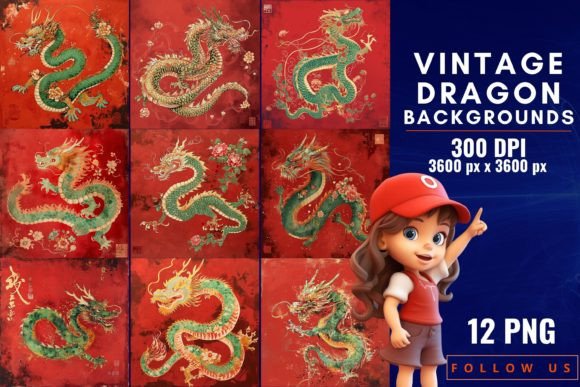
When we talk about "vintage" in the context of modern typography and design, we aren't just talking about making things look old. It is about evoking a specific era of craftsmanship. The Vintage Dragon Backgrounds collection relies on a fusion of mystique and sophistication. Visually, you will notice a heavy emphasis on intricate linework and engraving styles, reminiscent of old-world mapmaking or antique book illustrations. These aren't simple cartoons; they are detailed renderings that suggest history.
The "personality" of these backgrounds is authoritative yet enchanting. They command attention without screaming for it. This is crucial for designers because a background needs to support the foreground content, not compete with it. Whether you are layering text over them or using them as a base for digital collages, the visual noise is controlled. The color palettes lean toward muted, rich tones—think aged golds, deep burgundies, and slate blues—that provide a high-contrast canvas for lighter design elements. This style fits perfectly into the current trend of modern typography where designers pair clean, geometric sans-serif fonts with textured, organic backgrounds to create visual tension.
Strategic Applications: From Branding to Editorial Design
Understanding where to use these assets is just as important as the assets themselves. I see too many creators download a premium font or a high-res background and slap it onto everything. Context matters. Here is where Vintage Dragon Backgrounds truly shine:
- Logo Design and Brand Identity: If you are building a brand for a craft brewery, a fantasy author, or a bespoke clothing line, these backgrounds offer a rich foundation. Using them in the background of a hero image on a website creates an immediate sense of immersion. They help establish a brand identity that feels established and rooted in tradition.
- Packaging Design: For physical products, especially in the luxury or hobbyist sectors, texture sells. Imagine a label for a hot sauce or a board game box that uses these dragon motifs. It elevates the product from a commodity to a collectible.
- Editorial and Web Design: In publishing, particularly for book covers or magazine headers, the background sets the mood. These visuals work exceptionally well for "dark academia" aesthetics or historical fiction layouts. They provide a gritty, tactile feel that digital screens often lack.
- Social Media Graphics: In the fast-scrolling environment of Instagram or Pinterest, you need to stop the thumb. A textured, vintage background adds depth to flat graphics, making quotes, announcements, or event promos look more substantial and worth reading.
Design Mechanics: Readability, Hierarchy, and Pairings
A beautiful background is useless if it renders your text unreadable. This is where the technical side of design comes in. The Vintage Dragon Backgrounds are designed with visual hierarchy in mind. Because the textures are detailed but generally composed of mid-tones, they allow for strong typography to sit on top.
However, you need to be smart about your font pairing. Because these backgrounds are ornate and stylistic (acting almost like a display font in image form), you should avoid pairing them with overly decorative fonts like a script font or a complex handwritten font. The result would be visual chaos.
Practical Guidance for Pairings:
- The Contrast Rule: Pair these vintage textures with a clean, modern sans serif font. The geometric simplicity of a sans-serif cuts through the organic complexity of the dragon art, ensuring your message is legible.
- The Serif Approach: If you want a classic look, use a sturdy serif font. Avoid thin, hairline serifs that might get lost in the texture. Go for something with a bit of weight to anchor the design.
- Testing for Readability: Always test your text at various sizes. What looks good as a headline might disappear as body text. Use overlays or "knockout" shapes (semi-transparent boxes behind your text) if the background gets too busy in a specific area.
Evaluating Fit and Licensing for Commercial Projects
Before you download, take a moment to evaluate the project fit. Are you aiming for a brand identity that screams "futuristic minimalism"? If so, this collection might not be the right design asset for that specific project. These backgrounds are for projects that value heritage, storytelling, and atmosphere.
For those of you running businesses—entrepreneurs, marketers, and small business owners—licensing is a non-negotiable checkpoint. When you use these backgrounds for commercial work (client projects, merchandise, or digital products for sale), ensure you have the appropriate rights. The goal is to create professional work without legal headaches down the road. Treat these backgrounds like you would a commercial font; respect the asset to protect your business.
Ultimately, the Vintage Dragon Backgrounds are about giving you the tools to tell a richer story. They bridge the gap between digital sterility and the warmth of vintage art. Whether you are crafting a presentation that needs to captivate a boardroom or designing a poster that needs to stop traffic, these visuals provide the sophistication and mystique required to make your work memorable. Don't just design; create an atmosphere.